
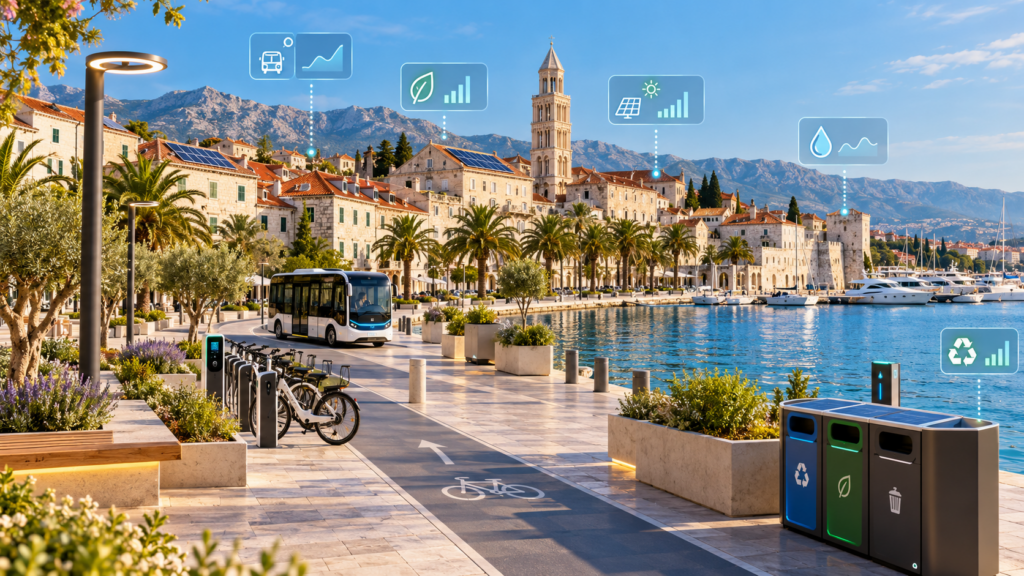
Tourism supports jobs and local businesses, but popular destinations also face traffic and pedestrian congestion, high demand for water and energy, lots of waste and pressure on public spaces. Split and other Croatian destinations experience these issues in a visible way, especially during the busiest summer months. Digital tools can help, although technology cannot decide what kind of tourism a community wants.
Smart and sustainable tourism begins with clear local goals. Data, apps and digital platforms should support those goals by helping organizations understand demand, manage resources and communicate better with visitors.
Use data to understand pressure
Tourism organizations already collect information through bookings, transport systems, visitor services and public infrastructure. When handled responsibly, these data can show when and where pressure is highest. A destination might compare visitor numbers with traffic conditions, water demand or waste volumes to identify patterns.
The purpose is not to collect every possible data point. Local authorities and businesses should define a question first. Do they want to reduce congestion around a historic centre, spread visits across the day or improve waste collection during peak periods? A focused question makes it easier to select useful indicators and protect personal data.
Hotels, restaurants and attractions can use digital monitoring to identify unusual energy or water use. Smart controls can adjust lighting, heating or cooling to actual occupancy. Better forecasting can help kitchens and suppliers reduce food waste. These measures often lower costs as well as environmental pressure.
Technology works best when staff understand the system and guests know how to participate. A dashboard does not save energy by itself. Employees need clear responsibilities, and visitors need simple information that does not make sustainability feel like a penalty.
Support better visitor choices
Digital platforms can recommend public transport, walking routes, less crowded times or experiences outside the busiest locations. They can also explain local rules, water constraints and appropriate behaviour in natural or cultural sites. This gives visitors practical alternatives instead of asking them only to be more responsible.
However, recommendations should be checked for unintended effects. Promoting a previously quiet location may simply move overcrowding elsewhere. Tourism managers need to monitor results and consult residents and local businesses when digital campaigns change visitor flows.
A relevant example from Croatia is LiberatoMap, a mobile application developed by the Split-based Liberato Association to help people with disabilities find accessible transport, accommodation, restaurants, parking and other facilities. By providing accessibility information and enabling users to plan routes according to their individual needs, the application demonstrates how digital technology can make tourism more inclusive and destinations easier to navigate.
Build the right skills
Smart and sustainable tourism requires people who can interpret data, understand resource use and design viable services. They also need communication, project management and cooperation skills because tourism involves public authorities, accommodation providers, transport operators, residents and visitors.
Universities can bring these competencies together through local case studies. Students might analyse a seasonal challenge, select indicators, propose a digital intervention and assess its environmental and social effects. A mixed team of tourism, computing, engineering and business students can examine the same problem from different perspectives.
The quality of the indicators matters. Occupancy rates and visitor spending describe economic activity, but they do not show the full effect on a destination. Students should also consider water and energy use, waste, transport patterns, resident attitudes and the distribution of benefits across seasons and neighbourhoods. This wider view supports better public decisions.
A question for readers
Tourism can become smarter and more sustainable when technology responds to a defined local need and when results are measured beyond visitor numbers. The goal should be a better balance between economic activity, resident quality of life and the resources on which the destination depends.
Which tourism pressure in your destination could be managed better with data, and what safeguards would be needed? Follow GreenTech Horizons for ideas on the skills that support sustainable digital innovation.
#GreenTechHorizons #GreenSkills #SmartTourism #Sustainability #HigherEducation