
“Digital transformation” can sound like something that happens in boardrooms and server rooms. Yet one of its most fascinating technologies is already in your pocket. Augmented reality (AR) overlays digital images, video and sound onto the real world – and unlike virtual reality, it needs no goggles or special equipment. A smartphone camera and an app are enough. That low barrier to entry is exactly what makes AR a quiet but powerful driver of the digital transition.
What AR actually is (and how it works)
Augmented reality does not replace the world around you – it enriches it. Depending on the technique, AR systems work in one of four main ways:
- Marker-based AR recognises a visual marker – a QR code, a photo, a logo – and anchors digital content to it;
- Projection-based AR projects digital images onto physical surfaces, even creating hologram-like effects;
- Location-based (markerless) AR uses GPS and motion sensors to place virtual objects in real space;
- Superimposition-based AR replaces the view of a physical object with an enhanced 3D representation – invaluable, for example, in medical imaging.
If you have ever caught a Pokémon on a sidewalk, placed IKEA furniture in your living room before buying it, or followed the walking arrows in Google Maps Live View, you have already used three of these approaches.
From entertainment to transformation
The business side of AR is growing fast and reaches far beyond games. Technicians repair machines guided by AR instructions displayed directly on the equipment – with a remote expert seeing what they see, no flight required. Retailers let customers try products virtually, reducing returns. Museums bring exhibitions to life. In education, AR turns static handouts into interactive materials: a printed diagram becomes a 3D model, a textbook page starts to speak.
There is a sustainability dividend here, too. Remote AR-assisted support means fewer trips by service engineers. Virtual try-ons and prototypes mean fewer wasted products and samples. Digital overlays on printed or physical materials extend their life instead of replacing them – small efficiencies that add up as the technology scales.
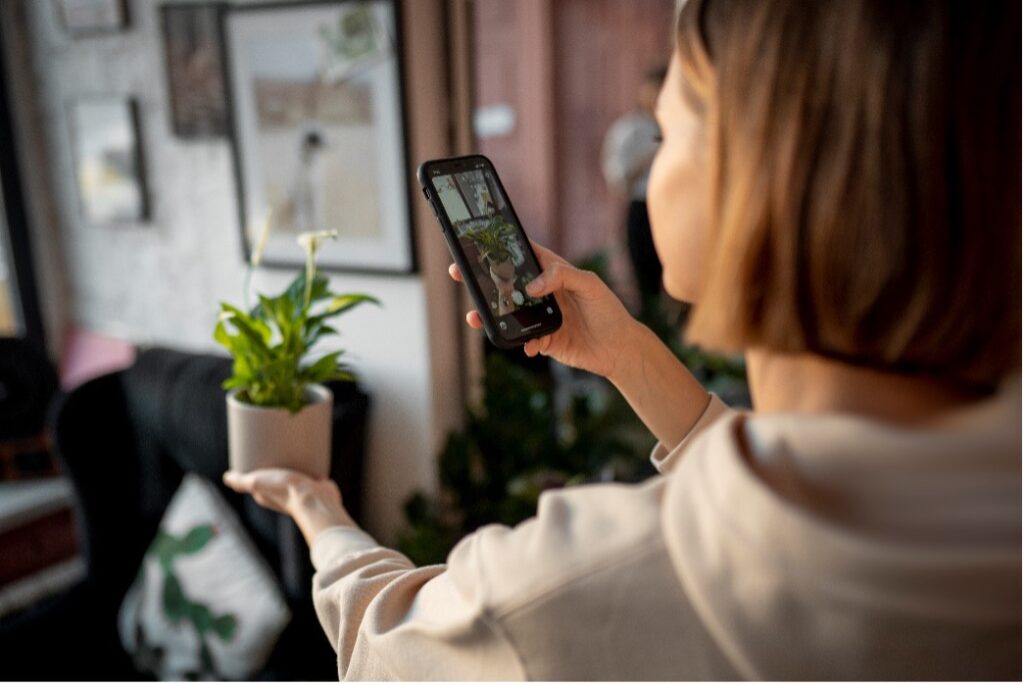
Source: https://www.magnific.com/
AR for everyone – no coding required
Perhaps the most important change of recent years is the democratisation of AR. Creating AR content used to require specialist programming skills. Today, tools make it possible to attach AR elements – audio commentary, video, photo galleries, web links – to any printed material or everyday object, with no code at all. An application developed at UITM, ARmixer, does exactly that: a teacher, marketer or librarian can turn a poster or a handout into an interactive experience in minutes. When a technology stops needing engineers for every use case, that is when transformation really accelerates – the story of the spreadsheet, repeating itself in 3D.
A skill worth trying
AR is a perfect example of why digital transformation is not only about big systems, but about people confident enough to pick up new tools and imagine new uses. If you want to experiment yourself, the entry cost is close to zero:
- ✔️ test a consumer AR app you already have access to (furniture placement, AR navigation, museum guides);
- ✔️ pick one printed material you use – a poster, a handout, a product label – and think about what digital layer would make it more useful;
- ✔️ try a no-code AR tool and build your first interactive object in an afternoon.
In the GreenTech Horizons MOOC Digital Literacy & Transformation for Sustainability, the Innovation Labs module invites learners to do precisely that: design sustainable digital solutions with the technologies at hand – AR included. And the Future Scenarios and Resilience in the Digital Green Economy module asks the follow-up question: how will technologies like this reshape work, education and cities in the decade ahead?What in your classroom, office or city would you augment first? Try an AR app this week – and explore https://greentech-horizons.com/ to build the digital skills behind the magic.