
NUM faculty explore green and digital skills for future software engineers
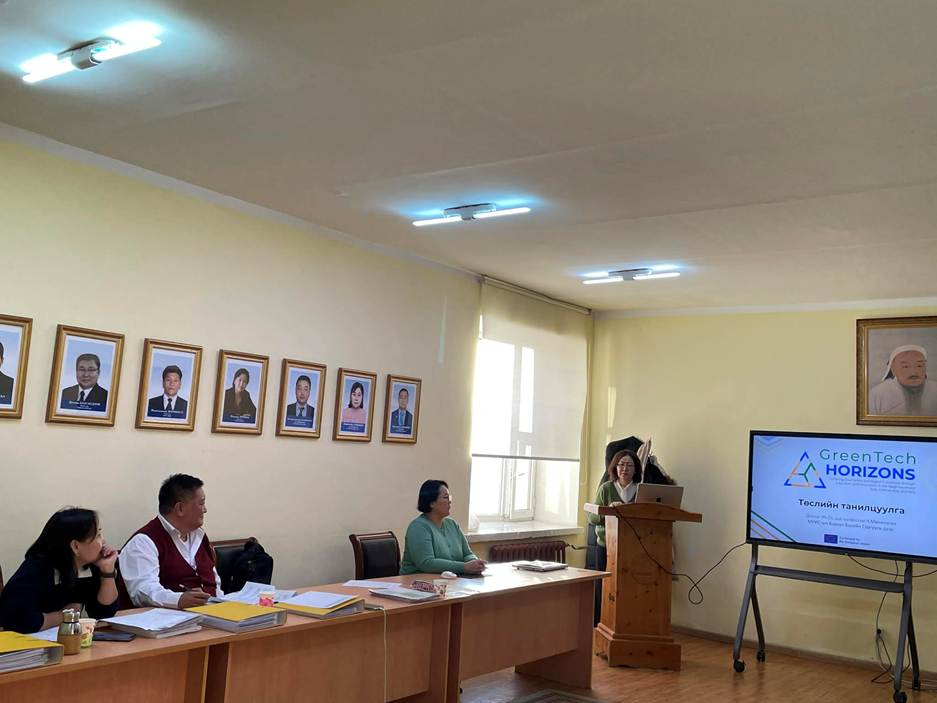
The National Accreditation Council hosted a two-day accreditation activity for the Software Engineering program at the Western Region School of the National University of Mongolia (NUM). As part of the event, the ERASMUS+ GreenTech Horizons project was introduced to faculty members and students, highlighting its contribution to higher education modernization and sustainable digital skills development.
Highlighting competencies for the future
The GreenTech Horizons presentation emphasized that future professionals need more than digital expertise, green and business competencies are increasingly essential. Faculty members were introduced to the project’s objectives, including:
- integration of green and digital skills into curricula
- effective pedagogical strategies for online and blended learning
- student-centered teaching approaches supporting the twin green and digital transition
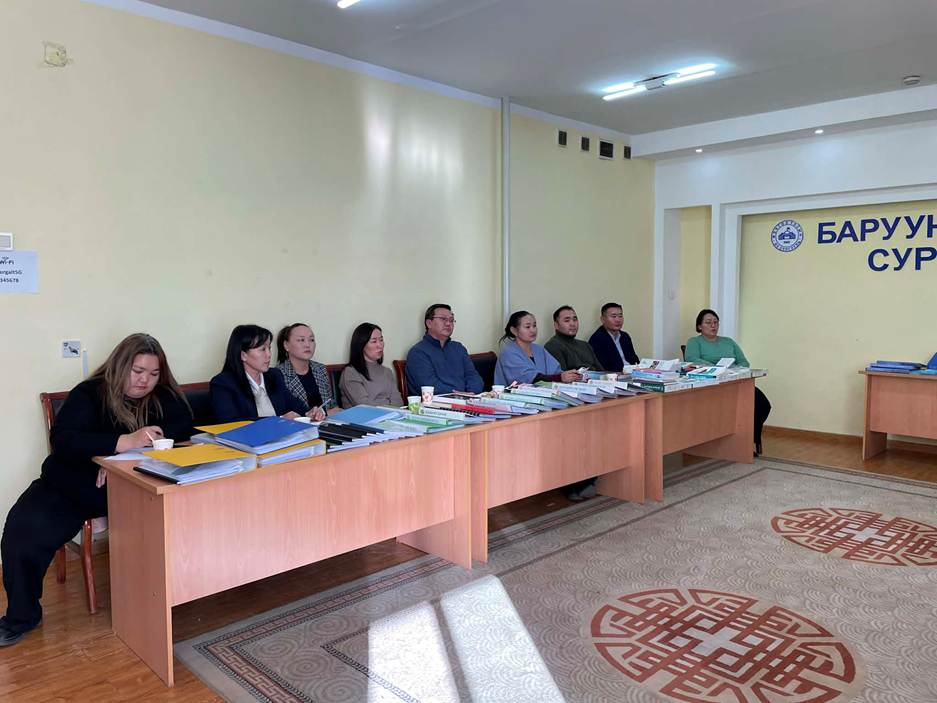
Twenty-nine faculty members and students from the Department of Mathematics and Computer Science participated, engaging actively with the presented materials and discussing applications for curriculum modernization.
Relevance and impact for international collaboration
The Twin Green & Digital Competency Framework attracted strong interest as a practical methodology for skills mapping. Participants recognized GreenTech Horizons as a highly relevant and transferable model for international higher education cooperation. Faculty members also expressed interest in exploring further collaboration under Erasmus+ Capacity Building and CEEPUS programs.
The Western Region School of NUM has extensive experience in Erasmus+ projects, including INTENSE (2017–2021), MELINC (2021–2024), and URGENT (2021–2024), reinforcing the institution’s commitment to innovation and international cooperation in education.
Dissemination and visibility
The project was promoted through a dedicated presentation and informal discussions during the event. Information about GreenTech Horizons, including links to official social media channels, was shared with participants to ensure continued engagement and visibility.
The accreditation activity successfully positioned GreenTech Horizons as a practical response to regional and global needs for green and digital competencies, supporting sustainable transformation in higher education.